Posted on 7 Comments

How to keep your place on a Blackwork or Cross Stitch chart
{DIY Chart Marker tutorial}

How to keep your place on a Blackwork or Cross Stitch chartSome charted designs for counted-thread embroideries, especially Blackwork, are very intricate and it’s easy to lose track of stitches.

To avoid this, you can:

– make a photocopied “working copy” of the pattern and use a highlighter to mark the completed areas

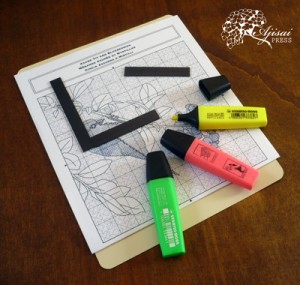
– fix the original chart on a metal board, and surround the area where you are working with magnetic strips and rulers (see photo to the right)

Alternatively, here is a simple and inexpensive chart marker that you can easily create by yourself:

DIY Chart Marker

DIY chart marker - Ajisai Press

DIY chart marker 3


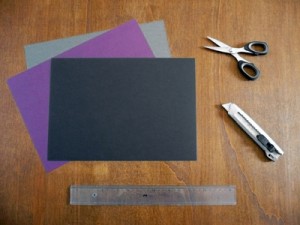
You will need:

  • cardstock (preferably in a dark contrasting colour)
  • ruler
  • paper cutter
  • decorative-edge scissors (optional)


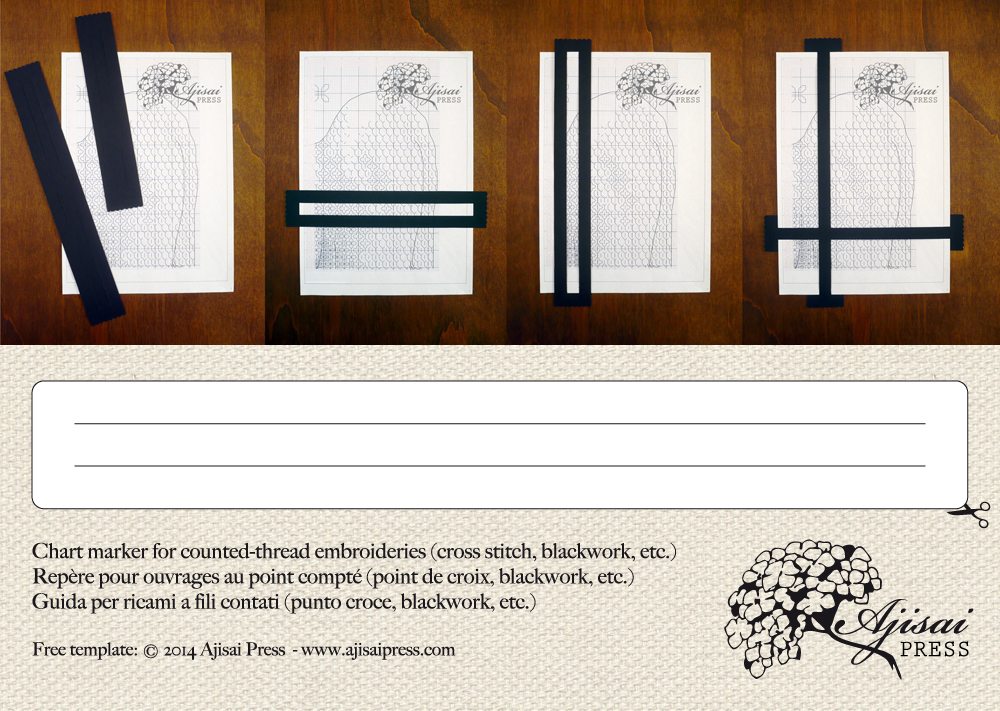
Cut a strip of cardstock, about 4,5 cm wide, and about 1,5 cm longer than your chart page on each side.

If you want, you can also decorate the two lateral edges using a pair of scalloped scissors. DIY chart marker 4Then, following the template below, cut two horizontal lines with the same width of the pattern sheet.

Chart Marker template - Ajisai Press

Your chart marker is now ready to be used: insert the chart through the two openings, and slide and position the marker where you need it.

You can use it alone or combined with another marker, with single sheets or with books and magazines.

DIY chart marker for cross stitch patterns - Ajisai Press

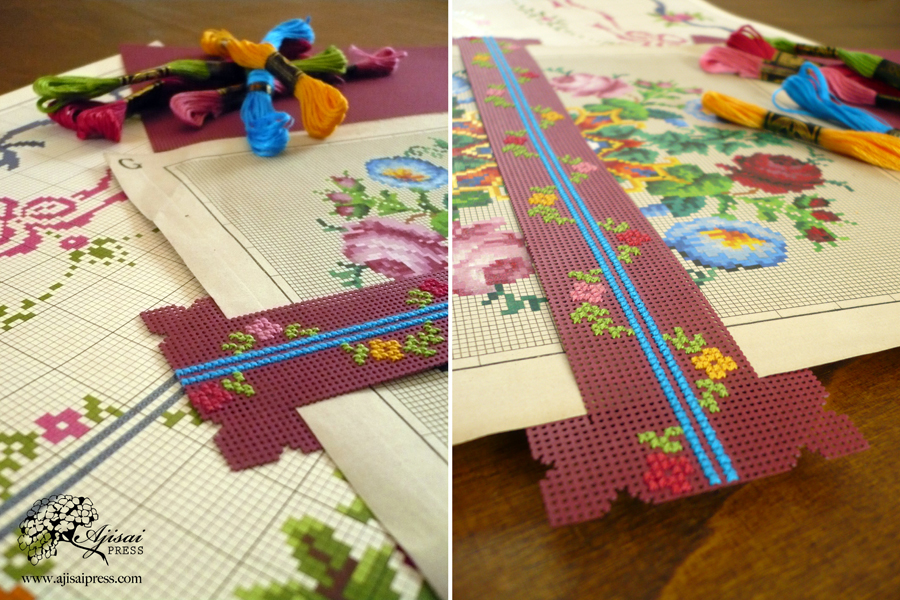
DIY cross-stitched chart marker - Ajisai PressOf course, you can make many other markers in any size, colour and material.

You can also add a personal touch using a colorful patterned cardstock or, why not, a piece of perforated paper worked in cross stitch.


The chart marker below was stitched on 18-count burgundy perforated paper with stranded cotton threads, using a floral motif from the book “Vintage Cross Stitch Borders“.

cross-stitched chart marker - Ajisai Press7


Posted on 2 Comments

A few words about copyright violations

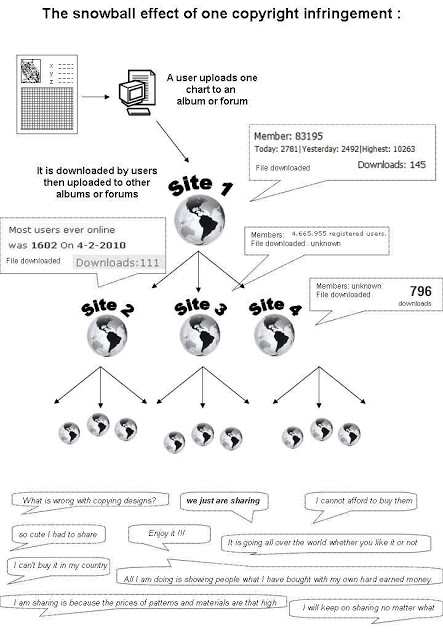
Our embroideries are appreciated all over the world and we often happened to find illegal copies of our designs on some cross stitch forums and blogs. At first, believing in the good faith of those who decided to share these patterns with their friends, we tried to explain that this is not correct, and we requested the removal of the illegal files.
Unfortunately, none of our requests has been heard. The illegal copies of the files have multiplied, and now we are forced to take legal actions.

snowball-of-infringements

Furthermore, we are very sorry to inform that due to these continuous copyright violations, our embroidery patterns will be no longer available in some countries, such as Russia, China, Vietnam and Eastern Europe area.

Behind every design there are thousands of hours of hard work that must be respected. Sharing a copyrighted embroidery chart is exactly like stealing, and hurts the designer, the publisher and all the other people involved.

If you love embroidery, and if you’re always looking for new and creative designs, please support the needlework industry and buy original.

scan logo ad

Thanks

The Ajisai Press team

___

UPDATE – April 2015:

Almost a year has passed, and after several requests, we have decided to re-open the sales worldwide. Anyway, we hope that this temporary block has helped to reflect on the consequences of copyright violations. Please, support the needlework industry.


UPDATE – August 2021:

Due to continuing copyright infringements, we have decided to stop digital selling of our designs. From now on, all our embroidery charts will be available worldwide exclusively in paper version through the international seller Book Depository.
Thank you for understanding,
The Ajisai Press Team

Posted on 9 Comments

Blackwork embroidery: a step by step guide

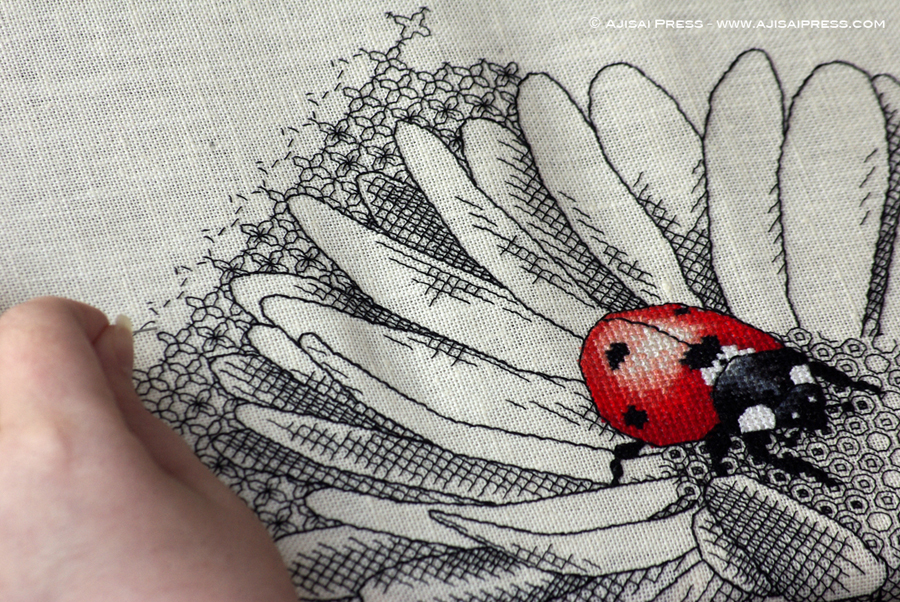
wip blackwork ladybug and daisy

In this post, I’m going to share with you some useful tips and some basic techniques to follow when stitching my blackwork designs.

blackwork embroidery equipment

MATERIALS

First of all it’s important to choose the right equipment:

blackwork fabrics and threads

– Fabric: although many embroiderers use Aida (blockweave) for their blackwork projects, for my designs I always suggest linen or evenweave fabric, because they are perfect for the partial stitches.
– Thread: traditionally, blackwork was stitched in black silk but, today, we can choose from a wide variety of threads, like cotton floss or sewing thread.
– Needle: always use a tapestry needle which has a blunt end.
– Frame: a frame is optional but helps to keep the fabric tight. I always use a scroll frame with a seat stand but, for little motifs can be helpful a smaller ring frame.

WORKING THE DESIGN

blackwork ivy front and back

People often ask me how to stitch a piece of blackwork embroidery with a perfect back. In my opinion, this is only necessary if both sides of the embroidery will be visible, also because many patterns are very intricate and not always reversible.
Anyway, in the video below, I will show you some tricks: how to start and end stitching without knots, and how to work the Holbein stitch (also known as double running stitch) correctly, for a neater back.

“Tea Party” chart: https://www.ajisaipress.com/product/mini-blackwork-motifs/